Make your first picture book
Create your first picture book
Choose YOLO quick creation or a manual project and move from a story spark into an editable Lumi workspace.
After provider verification, Lumi opens the project home. Use YOLO quick creation for a complete first shape or begin with an empty project. Both paths end in the same editable workspace.
Start with YOLO quick creation
- Select “YOLO quick creation” on the project home.
- Enter a project name and generation language, then choose a parent folder. Lumi creates a separate project folder inside it.
- Describe the smallest useful story idea. Include the protagonist, goal, obstacle, and ending change when possible—for example: “A young fox who fears the dark must cross the forest alone to deliver a letter that is already very late.”
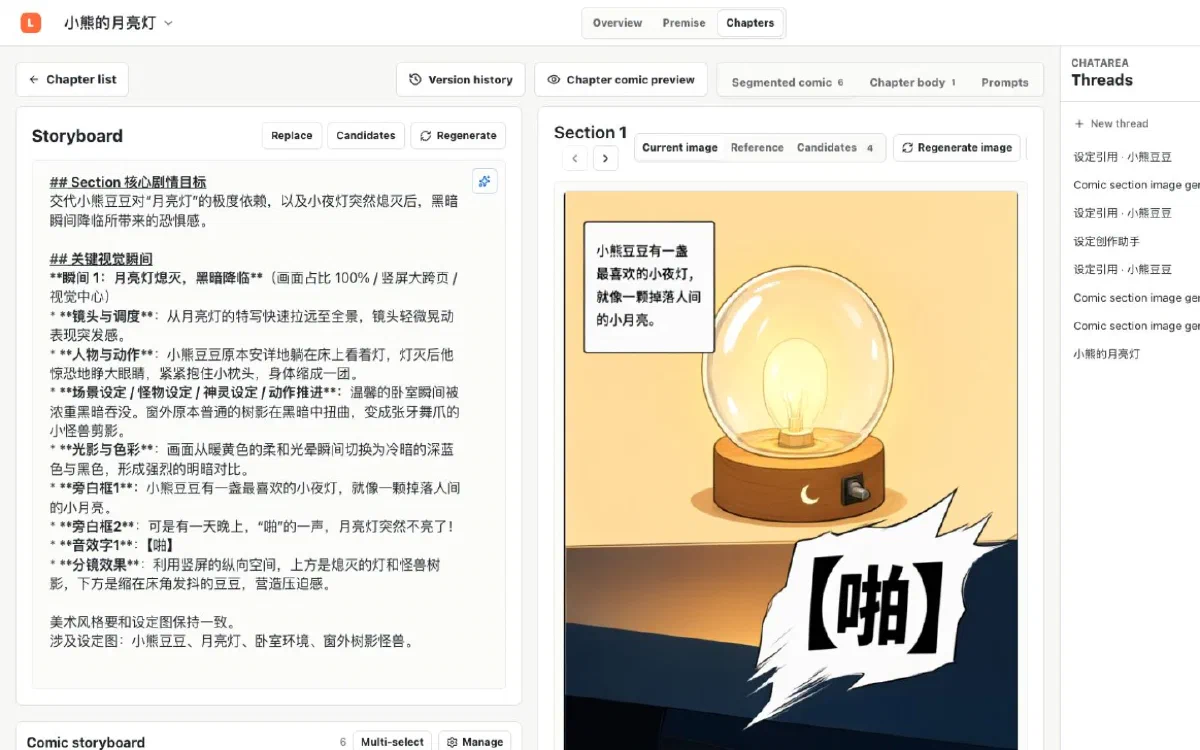
- Submit and let the workflow run. Lumi progressively creates the Story, story profile, premise content, comic sections, and a first image.
- Open the project overview when the workflow completes. Everything there is an editable starting point, not a locked final book.
Create a manual project
- Select “New,” then choose manual creation.
- Enter the project name, generation language, and parent folder.
- Enter the empty project. Begin with a story profile or create the first chapter directly.
- If you already have a TXT or Markdown draft, import it from the chapter workspace instead of pasting it into the project-creation form.
Open an existing project
Select “Open existing” and choose the complete Lumi project folder. A valid project normally contains project.sqlite, STORY.md, and assets/. Do not select only the database file or the image subfolder.
If you move the folder, its recent-project card may ask for relocation. Choose the same project at its new location. Lumi checks project identity and does not silently replace it with a different folder.
Confirm the result
The overview should show the project name and current story state. The top navigation opens Overview, Premise, Chapters, and related workspaces. Next, learn how the story profile and chapter prose work together.